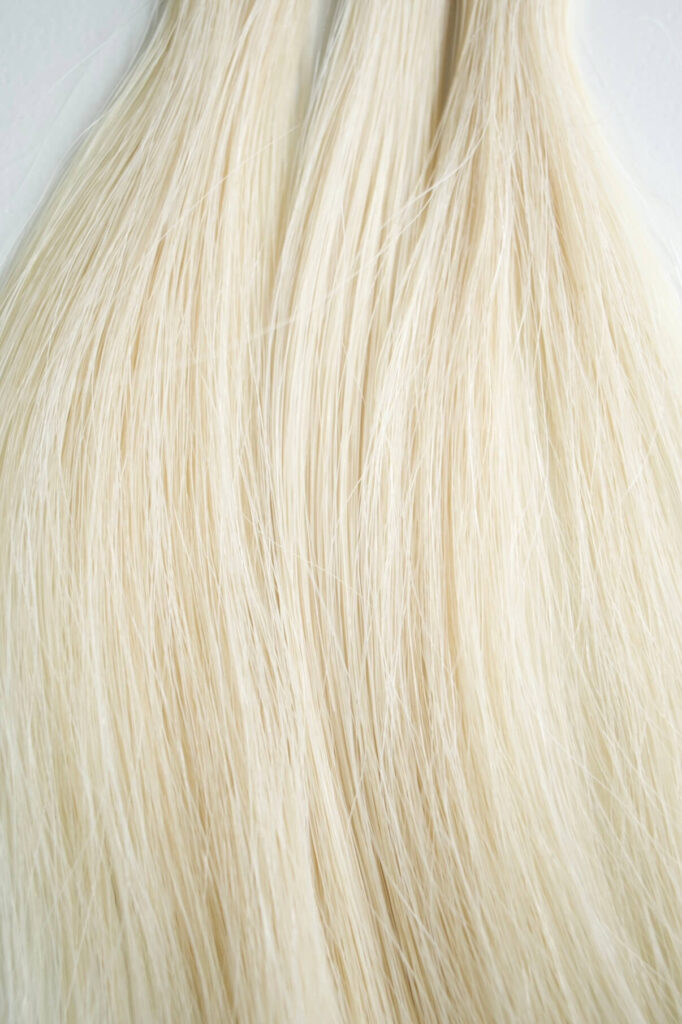
Blonde is a spectrum of depth, warmth and contrast. Understanding those three elements makes choosing extensions more precise.
A very light shade is not automatically the right match for every blonde. Your own hair might combine a deeper root, creamy mid-lengths and bright ends. The most useful question is how you want the extensions to join that picture.
Warm, cool and the space between
Warm blondes can carry golden or honey-like notes. Cooler blondes often look more muted, ashy or silvery. A neutral-looking blonde may sit between them, without reading strongly golden or grey.
These descriptions are guides rather than a universal colour code. One brand’s “ash” can differ from another’s, and a photograph can shift with the lighting. Compare the actual hair you intend to wear wherever possible.
Depth changes the impression
A creamy blonde can be light or relatively deep. An ashy shade can also have more shadow than expected. When comparing colours, first ask whether they are similar in lightness, then look at the undertone. Trying to solve a depth mismatch with a warmer or cooler name alone can lead you away from the result you want.
Take a photograph that includes both your mid-lengths and ends. If those areas differ, explain which part the extensions should continue and whether your stylist plans to blend the cut around them.
Rooted and dimensional colour
A darker root or a mix of lighter and deeper strands can create a more varied finish. The important detail is where the contrast sits. A long root shadow will read differently from a small amount of depth near the attachment area.
When sending a reference, describe the placement you like. “A deeper root with softly brighter ends” is more useful than “this blonde”, especially when the image has been styled, edited or photographed in strong light.
Compare the photographed options in Honey Blonde, Old Money Blonde and Riviera Blonde. Treat the collection names as a way into the range, then assess the depth and tonal variation of each individual product beside your own hair.
Build a colour brief your stylist can use
- Identify the current depth through your lengths.
- Notice whether your hair reads warm, cool or mixed in daylight.
- Decide whether you want to maintain that balance or change it.
- Agree any planned colour work on your own hair.
- Discuss the shade and placement of the extensions before ordering.
For help preparing your photographs, see our colour matching guide.
Think before toning
Do not assume every extension shade will respond to a toner or colour product in the same way as your own hair. The hair’s processing history and current condition matter. Before using a colour-depositing product or changing the shade, ask Solestré and a qualified colourist about the specific hair you have.
Discussing the intended colour before purchase gives you more room to make a considered choice. Browse the Solestré collection, or share your reference through a bespoke colour enquiry.